Plastic Surgery: Robotic Surgery (Da Vinci XI), AI, 3d Anatomical Blueprints, Model Tissue Pathophysiology, Complications, Advanced Rhinoplasty and Rhytidectomy, Mitigating Side Effects, Complex Facial Cosmetic Surgery
Keywords:
- Artificial Intelligence, Da Vinci Xi, Robotic Surgery, 3D Anatomical Blueprinting, Tissue Pathophysiology Modeling, Rhinoplasty, Rhytidectomy, Facial Cosmetic Surgery.
Abstract
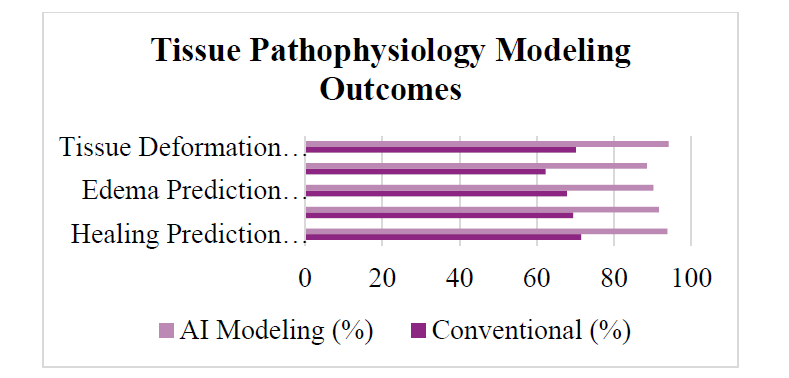
The field of plastic surgery is increasingly being revolutionized by the incorporation of Artificial Intelligence (AI), robotic-assisted surgery, 3D anatomical blueprinting and tissue pathophysiology modeling. The effectiveness of these technologies to use in advanced rhinoplasty, rhytidectomy, and complex facial cosmetic surgery is evaluated. A prospective, comparative research design is used, consisting of 200 patients, of which 100 received conventional surgery and 100 received AI-assisted robotic surgery with the Da Vinci Xi. The following AI-based technologies were used for pre-operative planning; facial analysis, 3D anatomical modeling, prediction of tissue response. The results showed that the predictive accuracy of planning and 3D blueprinting with AI was high and the surgical precision was significantly enhanced with robotic surgery, resulting in less blood loss, tissue damage and surgery time. The patterns of healing and postoperative complications predicted by tissue pathophysiology modeling were very well predictive. The patients who received AI-powered robotic treatments experienced better aesthetic and functional results, fewer complications, quicker recovery times, better quality of life, and increased patient satisfaction than those who received traditional treatments. Overall, the study suggests that incorporating AI, Da Vinci Xi robotic surgery, 3D anatomical blueprinting, and tissue pathophysiology modeling has the potential to transform the field of facial cosmetic surgery by improving precision, safety, and clinical outcomes.