Varicose Veins: Artificial Intelligence, 3d Magnetic Resonance Fingerprinting, Epidemiology, Etiology, Pathophysiology, Next-Generation Venous Diagnostics, Spider Veins, DVT, Microvascular Reflux, Macrovascular Remodeling, and Endovenous Ablation Therapy
Keywords:
- Varicose Veins, Artificial Intelligence, 3D Magnetic Resonance Fingerprinting, Chronic Venous Disease, Deep Vein Thrombosis, Venous Reflux, Endo venous Ablation
Abstract
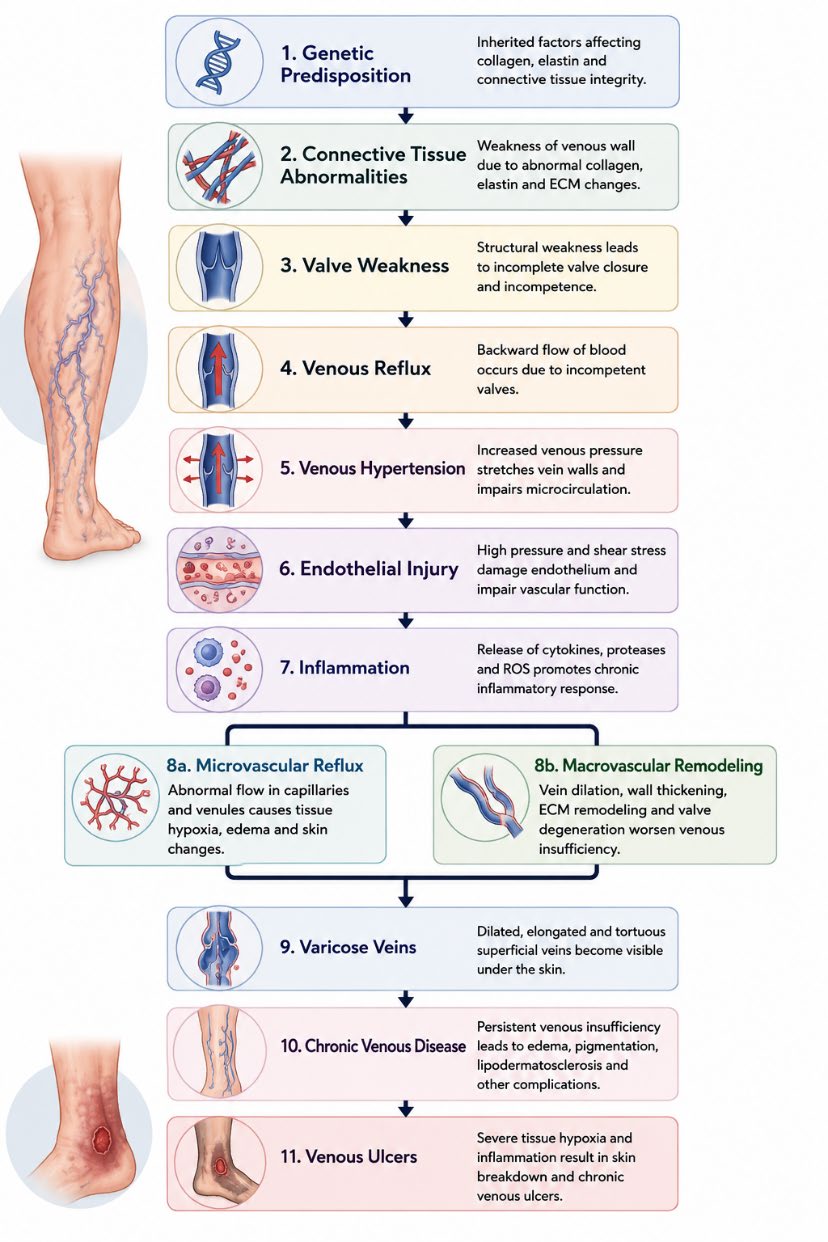
Chronic venous disease (CVD) is one of the most common presentations of this condition and is responsible for morbidity, significant health-care costs and poor quality of life in millions of people across the world who suffer from it, and in particular in those suffering from varicose veins. The disease is associated with venous valve incompetence, venous hypertension, vascular remodeling and progressive venous insufficiency. With the advent of new technologies in Artificial Intelligence (AI), machine learning, and 3D Magnetic Resonance Fingerprinting (MRF), the diagnosis and management of venous disorders have been transformed by improved imaging, predictive analysis and personalized treatment planning. This review outlines the current knowledge about the epidemiology, etiology, pathophysiology, clinical stages and complications of varicella. Special focus is on spider veins, deep venous thrombosis (DVT), microvascular reflux, macrovascular remodeling, next generation venous diagnostics, and minimally invasive endo venous ablation therapies. Research indicates that AI-powered imaging and sophisticated vascular mapping techniques can lead to more precise diagnoses and better treatments. The review emphasizes the existing knowledge gaps, new trends, and future directions in precision venous medicine.